top of page
ree

Let me start by saying this:


If you’re looking for a dusty academic tome filled with footnotes and jargon, From Dhows to Diaspora is not it. And thank goodness for that.


This book, penned by Dr. Hasnain Walji - a man whose wit is as sharp as his memory is long - reads more like a fireside chat than a formal history. It’s the kind of book you can imagine flipping through with a cup of chai in hand, pausing every few pages to nod, smile or let out a nostalgic sigh.


It’s personal, lyrical, layered and most of all, deeply rooted in the lived experience of the Khoja Shia Ithna-Asheri community.


Launched in June 2025 at the 29th Ordinary Conference of the Africa Federation in Mombasa, this book comes 64 years after the Federation’s last official publication. That’s right! Six decades without a community chronicle. One might say we were overdue. But as Walji reminds us early on, this book is not just a record of events.


It’s a story of identity, belonging, and memory. And frankly, it’s about time someone told it like this.


This landmark publication, almost three years in the making, is the result of a rigorous and collaborative endeavour led by the AFED Archives Sectional Secretary, Dr. Abbasaley Abbas assisted by Zaheera bai Alishan Raza and Ismat bai Khimji. It stands not merely as a compilation of historical data, but as a testament to careful scholarship and communal memory. The work has been significantly enriched by the contributions of seasoned subject matter experts, including Dr. Mohamed Raza Dungersi, Abdulhussein Tejani, Alhaj Ahmed Jaffer, Mustafa Pirmohamed, Zulfikar Vasram, and Munir Daya. Their insights, drawn from decades of experience and study, helped shape the narrative and deepen its authenticity.


Equally important was the role of Alhaj Aunali Khalfan, whose meticulous dedication to accuracy elevated the final manuscript into a polished and trustworthy historical record.


A Community Woven Through Time


The title, From Dhows to Diaspora, is both poetic and precise. It captures the long arc of the Khoja journey; from the dhow boats that carried our ancestors from Gujarat in India to East Africa, to the present-day diaspora scattered across five continents.


But here’s the brilliance: Walji doesn’t just trace a geographic journey. He unpacks the emotional and spiritual migration too. This isn’t just about how we moved. It’s about how we became.


The book opens with a reimagined conversation between a young man and Pirbhai Kaka, a quintessential elder figure who could just as easily be your own grandfather. He’s wise and brimming with stories. Through their dialogue, Walji takes us on a journey through time - one that feels intimate rather than distant, familiar rather than foreign.


Not Just What Happened, But How It Felt.


What makes From Dhows to Diaspora special is its tone. It’s not the kind of history that just lists what happened. It reflects on what those events meant; to the people who lived them, and to those of us still grappling with their legacy.


Walji moves seamlessly from tales of barefoot merchants trekking across crocodile-infested rivers to thoughtful analysis of theological shifts, from Satpanth syncretism to Twelver Shi‘ism. And he does it without ever sounding preachy or pretentious.


His humor is dry, his admiration genuine, and his critique, when it comes, always delivered with compassion.


Take, for example, his reflections on the Africa Federation. He doesn’t just rattle off dates or names of presidents. He paints a picture of how and why the institution mattered; showing us that it wasn’t built in comfort, but in crisis and determination. That its strength wasn’t in hierarchy, but in unity.


Honoring the Unsung


One of the most moving threads in the book is Walji’s tribute to the unsung heroes: the mulyanis, the madrasah teachers, the uncles and aunties who made it all happen behind the scenes.


These are the people who ran Jamaats without budgets and majalis without microphones. They didn’t do it for recognition. They did it because someone had to; and because service was part of their spiritual DNA.


On Tabligh


Another highlight is the chapter on the Bilal Muslim Mission. Walji narrates their story not as a checklist of accomplishments but as an example of humble, sincere tabligh.


No loud fanfare. No flashy marketing. Just quiet, determined work rooted in respect and faith.


It’s a lesson for our times, one that resonates deeply in a world obsessed with visibility.


A Book That Asks You to Belong


What sets this book apart is that it doesn’t end with a neat conclusion. Walji is clear; this isn’t the final word on our history. It’s the beginning of a much-needed conversation.


In fact, the final line of the book reads, “This story doesn’t end with the last chapter. It begins with YOUR next step.”


It’s a call to the younger generation - to see themselves not just as recipients of heritage but as its custodians. And it’s a gentle challenge to all of us to ask: What will we pass on?


Style That Feels Like Storytelling


From a literary perspective, Walji’s writing is a joy.


His sentences are crisp but never cold. He writes like a man who has edited a lot of newsletters and read a lot of poetry. There’s rhythm in the prose, but also restraint. He knows when to be poetic and when to just get to the point.


He weaves in Gujarati, Kutchi, Swahili, Urdu, and Arabic terms, not as exotic tokens, but as authentic reflections of how we speak, think and remember.


It’s a book that feels lived in. And for that reason, it feels alive.


Final Thoughts


In a time when communities are fragmented, when second and third generations are grappling with questions of identity, and when heritage often competes with hashtags, From Dhows to Diaspora arrives not just as a book but as a gift.


It’s not about glorifying the past. It’s about grounding the future.


If you’ve ever sat in a Jamaat hall and wondered how it all began…

If you’ve ever heard your grandmother’s stories and wished you had recorded them…

If you’ve ever felt both rooted and restless at once…Then this book is for you.


So, pick up a copy. Make some chai. Read slowly.


And maybe, like me, you’ll close the final page with a quiet smile and the feeling that you, too, are part of something extraordinary.


Article Written: By Alhaj Mustafa Pirmohamed.


From Dhows to Diaspora

Published by the Africa Federation


Available in print at the Africa Federation Head Office:

AFED Tower, 1st Floor, Jamhuri and Mwisho Street, Dar es Salaam

Price: TShs 12,000/- or US$ 5


For inquiries:

📞 +255 699 476 010 | +255 652 552 447


SECRETARIAT

ARCHIVES SECTION OF THE AFRICA FEDERATION


18th July 2025 / 22nd Muharram 1447 AH


Ashara Husainiya

MUHARRAM 2025

ree

 Muharram has returned

The dust of Karbala stirs once more

As hearts across the world echo ‘we are with you Husain’.


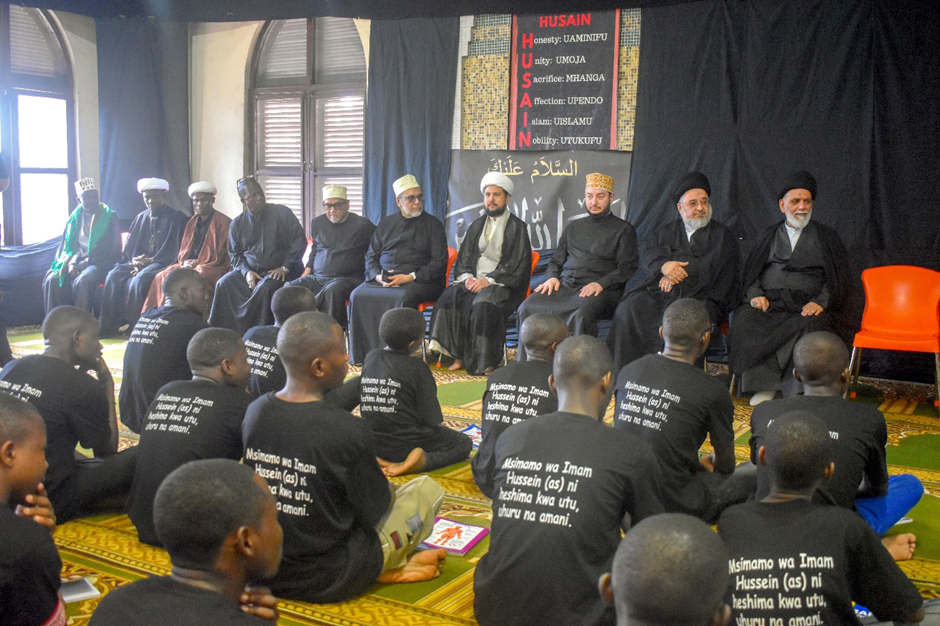
With generous support from a compassionate global community, Bilal Muslim Mission of Kenya facilitated Majalis al Husain over the first 10 days of Muharram at 46 community centres in Kwale, Mombasa, Makueni and Taita Taveta counties of Kenya.


ree
ree

Ashara Husainiya commemorations in Rural Kenya 


Whilst the majority of majalis were held at community centres, a handful were organized in small villages located in the close vicinity of the centres – at the homes of community members who wished to host the gatherings and welcome Imam al Hujjah (atfs) and Lady Fatima Zahra (‘a) into their humble abodes. Sunni Shiekhs were invited at some centres and they not only obliged, but fully participated in the azadari.


Tabarruk was provided daily by way of juice and biscuits and on Ashura Day, meat pilaw was served, having been kindly prepared by dedicated volunteers.


Other noteworthy initiatives included special supplications of the Day of Ashura, Qur’an recitation and tafseer sessions, Youth dialogue circles and charity drives. To further engage children and youth, coloring books were handed out at all madaris and other activities included quizzes and essay writing. Social and humanitarian outreach programs included large peaceful processions, mawkibs handing out drinks and charity drives for needy community members.


A session comprising some of the recommended duas and prayers for the Day of Ashura was captured live at Ar-Ridha Centre in the semi-rural town of Mtongwe. The session continued with maraathi, a heart wrenching recitation from the maqtal and latmiyat, as cries of ‘Ya Hussain Habibi’ and ‘Labbayka ya Shaheed’ resonated through the centre – all of which was livestreamed on our YouTube channel.

ree
ree
ree
ree
ree


Majalis at Bilal Hall in Mombasa – Day 1 to 9


Bilal Hall in Mombasa transformed into a dedicated Husainiya, hosting majalis for the first 9 days. Two sessions were held daily, with ladies gathering in the mornings at 11am and the gents paying tribute at 5 pm. The programs were livestreamed daily and lectures centered around the theme ‘Karbala and its relevance and importance today’, Programs concluded with the distribution of tabarruk which comprised freshly cooked sweet and savory snacks, biscuits and juices. Alhamdulillah there was commendable turnout with Day 9 numbers recorded at 190 for the gents and 126 in the ladies.

ree
ree

Final Reflections 


The remembrance of Imam Husain (a.s) remains central to our work and to our identity. Through these majalis and related activities, we aim not only to honour his sacrifice, but also to teach his message and pass it on in a way that is relevant, grounded and sincere.


We thank all our generous donors, volunteers who served quietly in the background and all those who participated. May the message of Karbala live on through majalis, community bonds and the values instilled in our youth.


We also thank Africa Federation and World Federation for their long-standing support and encouragement.


We pray for the quick reappearance of Imam Al Hujjah (a.t.f.s).


Communications Secretariat

Bilal Muslim Mission of Kenya


17th July 2025


Ref: AFED/PR/002/25                                                           Date: July 17, 2025


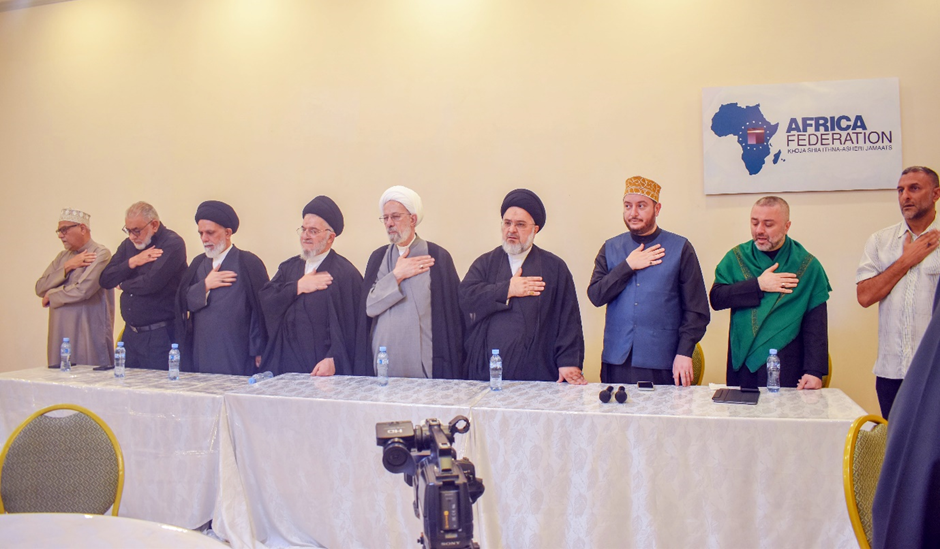
The 29th Ordinary Conference of the Federation of KSI Jamaats of Africa was held in Mombasa from Friday 13th to Sunday 15th June 2025 and was attended by over 150 participants.  The Africa Federation Chairman Alhaj Amine Nassor took the opportunity of this Conference to honour the Vice Chairman of Africa Federation, Alhaj Aunali Khalfan for his long honorary services to the community and Africa Federation; and to Alhaj Gulamabbas Dewji and Alhaj MohamedSaleh Jacksi for their dedicated services to the community.  He also recognized Syed Hassan Al-Hakeem of The Mainstay Foundation for their support and contributions to Africa Federation. The presentations were done on Friday 13th June 2025 during the Opening Night of the Conference. 


Citations for each of the recipients were read out giving a brief chronicle of their achievements, services and their significant contributions. 


Awards & Citations: 


Citation presented to Seyed Hassan Ali MohammedMahdi Al Hakeem, Executive Trustee of The Mainstay Foundation, U.K. from Africa Federation and Bilal Muslim Mission: 


In recognition towards his unwavering support and numerous contributions by the Mainstay Foundation to the Bilal Muslim Mission in several countries in Africa in the form of Ramadhan Relief, Economic Upliftment Projects, Education, Renovations of the premises of the Bilal Centres, and towards the operation of Tabligh activities. 


The Citation was read out by Alhaj Hussein Karim, Chairman of Bilal Muslim Mission of Tanzania and presented to him by the Chairman of Africa Federation, Alhaj Amine bhai Nassor.


ree

Haydari Medal – Murrabbi Alhaj Aunali bhai Khalfan:  


Presented towards his invaluable services to the Community at large. His 60 years of dedicated services encompassing several institutions, including Husseini Tazia Khana in Zanzibar, Ithna-Asheri Union, KSI Jamaat of Dar es Salaam and Africa Federation; he served Africa Federation (AFED) as Chairman of the Central Health Board (CHB) for twelve years, as Hon. Secretary for six years and as Vice Chairman for nine years; where he contributed significantly towards key administrative reforms and strategic initiatives that strengthened the Secretariat and improved in general administration and in service delivery. 


The Haydari Medal was bestowed upon him by the AFED Trustee, who is also the past Chairman of AFED, and the past President of the World Federation, Alhaj Anwarali Dharamsi, jointly with the AFED Trustee, and past Chairman of AFED, Alhaj Shabir Najafi and the current Chairman of the Africa Federation, Alhaj Amine Nassor. The Citation was read out by Alhaj Kumail Manji and presented by Alhaj Shabir Najafi and Alhaj Dr. Mohamed Jaffer, the past President of KSI Jamaat of Mombasa.


ree

Husseini Medal – Alhaj Gulamabbas bhai Dewji (GD):  


Presented to Alhaj Gulamabbas bhai Dewji, in recognition of his philanthropic contributions and support. A key pillar of his philanthropy has always been education, benefiting countless students. He donated a major property in Ubungo, Dar-es-Salaam, in memory of his late parents (now known as the Mzee Hassanali na Mama Fatemabai Dewji Islamic Centre) entrusted to Bilal Muslim Mission of Tanzania for the education of Shia indigenous girls. He also donated a plot on Libya Street that enabled the development of Al Asghary Residency under AFED’s pioneering “Rent to Own” housing scheme, advancing affordable home ownership. 


The Citation was read out by Alhaj Altaf Bhimani. The Husseini Medal and Citation was presented by the AFED Chairman, Alhaj Amine bhai Nassor and was received by Alhaj Mohamedraza bhai Dewji, President of KSI Jamaat Dar-es-Salaam on behalf of Alhaj Gulamabbas bhai Dewji.


ree

Abbasi Medal – Alhaj MohamedSaleh bhai Gulamali Jacksi:   


Presented towards his selfless services to the community which started from the year 1968. He chaired the Union Sports Club in 1975 and 1983 and played a key role in relocating the Union Nursery School from the old location near the Mosque to the Boarding House along United Nations Road. Known for his unwavering commitment, he has regularly attended the AFED meetings and helped mediate issues, notably Kuwwatul Islam Jamaat in Zanzibar in 2018. His dedication and love to the community continues to echo in Dar es Salaam. 


The Abbasi Medal was bestowed upon him by the Vice President of World Federation, Alhaj Habib bhai Meghjee. The Citation was read out by Dr. Mazaher Jaffer, Chairman of Nairobi (SAAJ) Jamaat and presented by AFED Chairman, Alhaj Amine bhai Nassor.


ree

We pray to Allah (SWT) with His infinite Grace and Blessings to reward them all with long, healthy and prosperous life and grant them more tawfeeqat to continue serving the community and humanity at large - Ameen.


Secretariat


bottom of page