top of page
80 YEARS LOGO_edited.png

CIRCULAR NO: JMT/043/26                                        Date: 14th February 2026


ANNULAR ECLIPSE OF THE SUN

Tuesday, 17th February 2026


Africa Federation Jamaats in South-East Africa are informed that there will be an Annular Solar Eclipse on Tuesday, 17th February 2026 (28th Shabaan 1447 AH). The time of beginning and ending of the Annular Solar Eclipse according to the Jamaats where it will be visible is as follows:


The annular phase of the eclipse will not be fully visible in the above regions, but will be observed as partial solar eclipse.


For more details and animation on how the Eclipse will look at your locality visit the link: https://www.timeanddate.com/eclipse/solar/2026-february-17


Momineen in these regions are requested to offer Namaaz-e-Ayaat.


Secretariat


From Vision to Reality: The Shift Begins With Us 


The World Federation Youth Conference (WF YCon) 2026 was held in Dar-es-Salaam from Friday 30 January to Sunday 1 February 2026, organized by the World Federation of KSIMC in collaboration with the Africa Federation Youth Network (AYN). It was guided by 3 core objectives: empowerment, faith-driven leadership, and visionary unity. Unfolding as a carefully curated three-day journey under the theme “The Shift Begins With Us,” the conference brought together young members of the Jamaat from across the world, including COEJ, NASIMCO, India Federation, Pakistan Federation, the Africa Federation, and Khoja communities Australasia (KSA). 


Day One: Arrival, Connection, and a Shared Beginning

The first day opened with the recitation of the Holy Quran, grounding the gathering in reflection and sincerity. As youth arrived from different regions of the world, there was a sense of anticipation in the room. For many, this was their first experience of a global youth gathering within the community. 


The welcome session set expectations clearly. This was not a conference built around passive listening. It was designed as a space for participation, honesty, and responsibility. The ice breaker and team-building session led by Shabbirhussein Bhai Khalfan played a vital role in shaping the rest of the weekend. Through structured activities, team-building exercises, and group interaction, participants quickly developed a sense of comfort and openness.


The opening ceremony that took place at the ExCo Meeting placed purpose at the forefront. It framed the three days as a collective effort to think, speak, and act with intention. After congregational prayers and dinner, the evening shifted toward community building through Baraza and Masti Mayhem. This session blended play, conversation, and teamwork. It allowed youth from different federations to connect beyond background or title. 


As the first day came to an end, feedback from participants reflected excitement and appreciation. Many shared that they already felt welcomed, included, and eager for the days ahead.


Day Two: Identity, Dialogue, and a Seat at the Table

The second day once again began with Quran recitation, reinforcing reflection and focus. The morning session, ‘Inside the Culture’, led by Br. Alihassan Kassam and Sis. Fatema Abdulrasul, addressed questions deeply familiar to many young people. How to live faith sincerely while navigating culture, family expectations, and modern society. Participants engaged openly, sharing experiences from different parts of the world. The discussion helped many distinguish between faith-based values and inherited practices. It offered clarity and reassurance, and feedback showed strong appreciation for the honesty and relevance of the session.


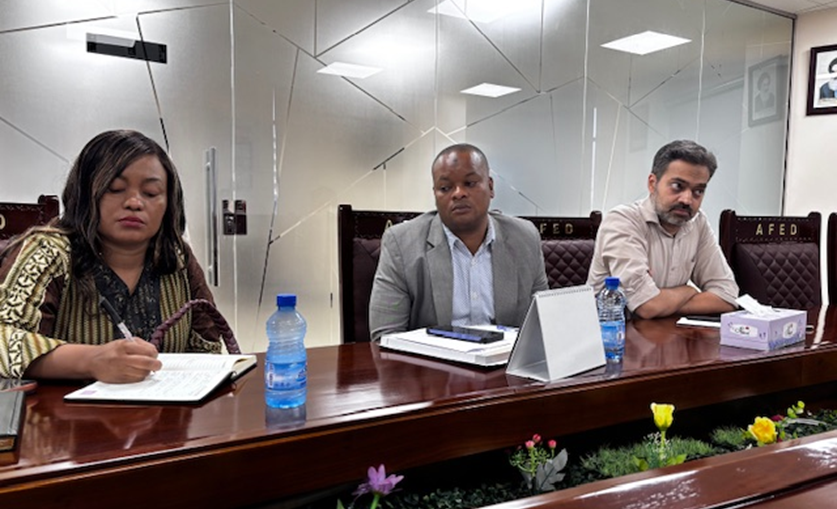
The Vision 2050 discussion stood as one of the most defining moments of YCon 2026. Youth representatives from regional federations sat alongside members of the World Federation Executive Council. This space allowed young voices to speak directly about challenges, concerns, and hopes for the future of the community.


The exchange was thoughtful and respectful. The youth delegates spoke with confidence and preparation. Council members listened with attention. This session reflected a genuine step toward shared responsibility and trust between generations.


Later in the day, Br. Farhan Yusuf led a session focused on contribution and service within the Jamaat structure. He spoke about adding value at the local, regional, and global levels. His message was practical and grounding. Leadership does not wait for permission. It begins with consistency and commitment.


The day concluded with a dinner hosted at the residence of the Dar es Salaam Jamaat President Alhaj Mohamedraza bhai Dewji.


Day Three: The Future, Responsibility, and Personal Commitment

The final day opened once again with Quran recitation, maintaining the spiritual rhythm established throughout the conference. Attention then turned toward the future and the realities youth face in a rapidly changing world.


A panel discussion on artificial intelligence brought together Sheikh Alexander Khaleeli, Br. Haider al Rekabi, and Br. Akber Datoo. The discussion explored opportunity, ethics, and responsibility. Participants engaged actively, asking questions and reflecting on how faith guides the use of modern tools.


This was followed by a session led by Br. Asad Hamir on earning, giving, and building with purpose. He spoke about aligning work and business with values, reminding youth that success holds meaning when it benefits others. Feedback from this session reflected strong engagement and inspiration, especially among those considering future career paths. 


The youth then presented their collective resolutions and ideas to the WF Executive Council. These proposals reflected three days of discussion, collaboration, and thought. They were structured, relevant, and grounded in lived experience. This moment demonstrated the shift from discussion to contribution.


The conference closed with a reflection by Dr. Kamaal Sherrif in a session titled “How Can the Shift Begin With Me?” His session turned the focus inward, exploring responsibility, intention, and action at the individual level. His message resonated deeply, encouraging each participant to reflect on their role within their family, Jamaat, and wider society. 


As the conference concluded, feedback from the youth remained consistent. Participants expressed gratitude for the space created, the respect shown, and the depth of engagement sustained across all three days. 


A Lasting Impact

YCon 2026 was not experienced as a single event, but as a journey that unfolded day by day. From connection, to conversation, to commitment, the Conference reflected what becomes possible when youth are trusted and guided. 


YCon 2026 reminded us that meaningful change does not come suddenly or from afar. It grows through faith, consistency, and trust between generations. The conversations that began in Dar es Salaam now continue in homes, Jamaats, and communities across the globe. 


The shift spoken of throughout the conference was not symbolic - It was lived.


Secretariat

Africa Youth Network


14th February 2026


19th February marks the death anniversary of Edalji Dhanji Kaba (1877–1925), one of the earliest Khoja historians and a prolific writer whose contributions continue to hold lasting value. 


Edalji Dhanji Kaba may not be a widely spoken name today, yet he was among the quiet contributors whose work helped shape Khoja history. Through his writings, he preserved the story of the community at a time when it mattered deeply, leaving behind records that continue to guide later generations. 


Born in 1877 in Amreli, Gujarat, with ancestral roots in Kotda Sangani, Edalji Dhanji Kaba grew up in modest circumstances. His early education took place in Amreli, where financial hardship was a constant reality. His father could just manage the school fees, and young Edalji often undertook small errands to afford books and study materials. Despite these challenges, his commitment to learning remained firm. 


He showed particular strength in Urdu studies and later began learning English. However, at the age of 18, he had to discontinue his formal education when he started working as an assistant in an Urdu school. In time, through diligence and integrity, he became a teacher himself. His years in education shaped his outlook, instilling in him a strong sense of ethics, fairness, and responsibility towards society. 


Edaljibhai’s religious journey was marked by sincere reflection and personal conviction. Influenced by his mother’s devotion and his own growing understanding, he embraced the Shia Ithna ‘Asheri faith. This transformation would later reflect clearly in his writings, which were grounded in honesty, clarity, and a deep concern for the preservation of communal identity. 


His literary work began with translations for Rahe-najat Monthly, where he rendered Urdu writings into Gujarati. These early contributions helped refine his skills and build confidence. He soon began contributing original articles to various publications and authored his first book, a biography of Hasan bin Sabah, which was well received. He later co-founded the monthly Bahare Gulshan, further establishing his presence in the world of writing and publishing. 


In 1907, Edalji Dhanji Kaba undertook a long steamer journey to Zanzibar, where he served as editor of Jangbar Samachar which was owned by Fazal Master family.


Although his stay there was brief, the experience broadened his exposure and strengthened his resolve. With financial support from Hasanbhai Virji and Abdullahbhai Punja, he acquired a printing press but eventually settled back in Amreli, determined to promote education and document the history of his community. 


The establishment of the Azad Hind Printing Press marked a defining phase of his life. From this modest press emerged a remarkable body of work that documented the religious, social and historical narrative of the Khoja Shia Ithna Asheri community. At a time when resources were scarce, his commitment to recording events and preserving written records was exceptional. 


In 1912, he published his most significant work, Khoja Kom ni Tawarikh, the first comprehensive historical account of the Khoja community. This publication became a foundational reference for later scholars and historians. He later wrote Kaba ni Kahani, his autobiography, offering insight into his personal struggles, motivations and convictions. 


Over his lifetime, Edalji Dhanji Kaba authored more than 80 books and publications. His works covered history, theology, biography, and social commentary. Among his notable contributions are Firdawas-e-Bari, Noor-e-Hidayat, Khoja Panth Darpan, Khoja Prakash (a weekly magazine), and Hasan bin Sabah. He also played an important role in publishing Khoja Vrattant by Sachedina Nanjiyani in 1918. 


What makes Edalji Dhanji Kaba’s achievements truly remarkable is not merely their volume, but the circumstances under which they were produced. He had no university education, no formal training in law, journalism or seminaries. Yet, through sheer discipline, intellectual honesty and commitment to truth, he produced work of enduring scholarly value. His meticulous documentation of historical events and records stands as a benchmark of dedication, achieved with extremely limited resources. 


Despite his immense contribution, Edalji Dhanji Kaba lived a simple life and passed away in 1925 at the age of 48. For many years, his grave in Amreli stood quietly before being restored and honored through the World Federation Khoja Heritage Project and recognised as a Khoja heritage site. Today, it forms part of the annual Khoja heritage tour.


Edalji Dhanji Kaba’s legacy lies not in recognition or material success, but in the lasting value of his work. Through his writings, he ensured that future generations would have access to their history and heritage. His life remains a reminder of the power of sincerity, perseverance and the written word.


May Allah (SWT) grant maghferat to the departed soul of Marhum Edalji Dhanji Kaba, elevate his status among the righteous, and accept his lifelong service as a source of ongoing reward. May his efforts continue to benefit generations to come. Ameen.


SECRETARIAT

ARCHIVES SECTION OF THE AFRICA FEDERATION


13th February 2026 / 24th Shaban 1447 AH


bottom of page